
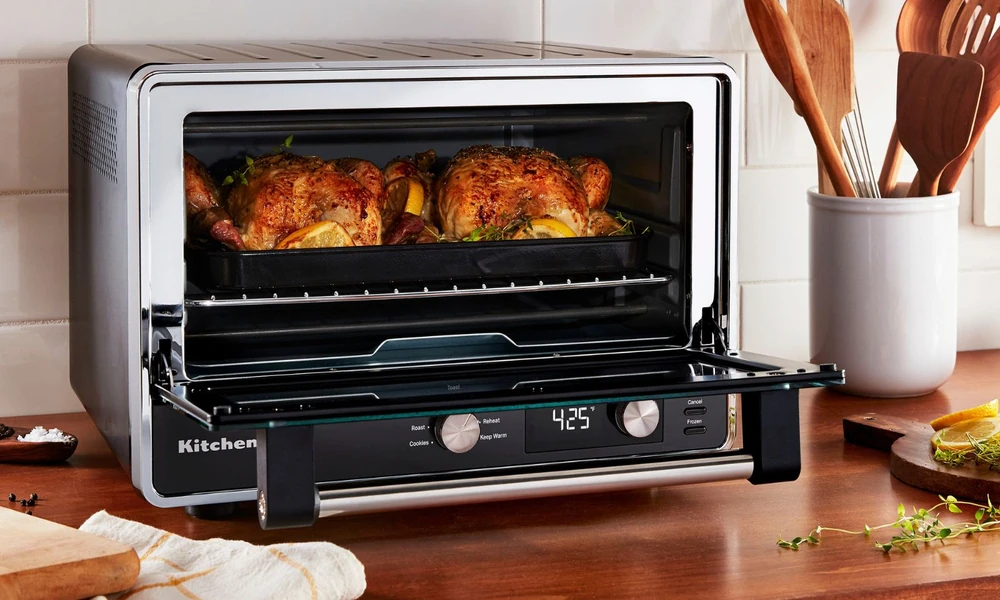
The conversation about non-toxic cookware and appliances has expanded from pots and pans to include the appliances used to heat food. Conventional non-stick coatings on toaster oven racks and interior surfaces – typically PTFE-based (Teflon) – release compounds when overheated that have raised health concerns, particularly when cooking at temperatures above the manufacturer’s recommended maximum. The non-toxic toaster oven category addresses this by eliminating these coatings in favour of materials that do not have associated health concerns.
What Non-Toxic Means in Practice
A [object Object] uses interior materials and coatings that do not release harmful compounds under normal cooking conditions. The most common approaches are stainless steel interiors with no coating, ceramic coatings that are PTFE and PFAS-free, and enamel surfaces that are heat-stable and non-reactive. Each approach has different characteristics in terms of ease of cleaning, heat distribution, and longevity.
The PFAS Concern
Per- and polyfluoroalkyl substances (PFAS) – the family of chemicals to which PTFE belongs – have become a significant concern in food contact materials. While the evidence specifically for non-stick coatings on toaster oven surfaces is less developed than for cookware, the precautionary principle that drives many consumers toward non-toxic cookware applies equally to the oven that heats the food. Products explicitly designed and marketed as non-toxic address this concern directly.
Cleaning and Maintenance
The cleaning characteristics of non-toxic toaster oven interiors differ from conventional non-stick surfaces. Stainless steel interiors are more durable but require more effort to clean baked-on residues. Ceramic coatings clean easily but may chip if subjected to impact. Enamel surfaces are durable and relatively easy to clean. Regular cleaning after use – before residues have baked on through repeated heating cycles – is the most effective maintenance strategy for any non-toxic interior.
Kitchen Air Quality
Even with a non-toxic oven interior, cooking at high temperatures produces smoke and cooking odours that benefit from adequate ventilation. The [object Object] provides extraction at the countertop position where a toaster oven is typically placed, maintaining kitchen air quality without requiring a fixed overhead installation above every countertop cooking position.