
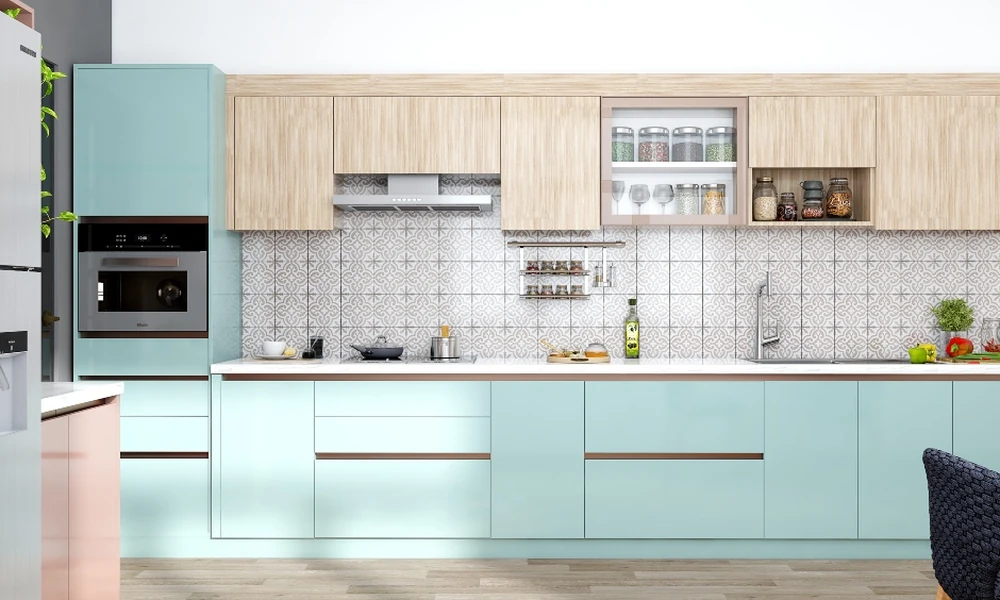
An efficiently designed kitchen is not all about beautiful finishes. The location of storage space, convenience of access, and durability of material can affect the usability of the kitchen. The combination of lower cabinets made of durable acrylic and top cabinets with glass doors is a practical solution in modern kitchen design. The proposed model offers the advantage of easy access to the contents of drawers without compromising the lightness of the top cabinets.
It is important to choose between acrylic and glass based on the suitability of these materials for specific locations. Lower cabinets are subjected to greater usage, while upper cabinets may have different priorities such as visibility and display. This understanding will help homeowners design kitchens that are both functional and harmonious.
Why Acrylic Works Well for Lower Kitchen Drawers
The job of lower cabinets is to effectively perform a wide range of tasks, which often includes storage of dishes and pots, food products, and other items. Acrylic kitchen base drawers can ensure a smooth, contemporary look of cabinets, corresponding to the modular nature of kitchens. The appearance of acrylic drawers may vary from glossy surfaces to softer finishes, the full range of acrylic sheets for kitchen cabinets to find scratch-resistant, moisture-proof options in high-gloss, satin and matte finishes suited for lower drawer fronts and base cabinet shutters in modern modular kitchens.
The effectiveness of acrylic depends on the quality of the board, substrate, and drawer production. As lower cabinets are used frequently, it is necessary to choose durable runners, fittings, and finished edges. Even though the surface may be scratch-proof, it is still better to choose resistant materials to maintain the appearance of the furniture.
Designing Heavy-Duty Lower Cabinets for Everyday Use
Ergonomic storage below reduces the need for constant bending down, reaching far back, or picking up different utensils. The cabinets should prefer deeper drawers over standard cupboards, as deep drawers keep the cookware in a more organized way than cupboards, especially if there are dividers or adjustable organizers installed. Also, the drawers can have full-extension runners that make it easier for the person to reach the back of the drawer.
When selecting heavy-duty acrylic cabinet shutters as well as the drawer fronts, attention should be given to the actual materials from which the cabinet is built and the weight it is supposed to hold. The material of the acrylic coating is not the only key to the weight capacity of the drawer; the sides of the drawer, runners, and fastening accessories are very important too. Scratch-resistant lower modular drawers are notably better for upkeep in very busy kitchen areas if the finish of the surface and hardware quality are appropriate for practical use.
The Advantages of Glass Cabinets Above the Countertop
Upper cabinets serve a different function than lower ones. These cabinets hold cups, glasses, some lightweight tableware, and generally things that the owner of a kitchen wants to keep visible or easily recognizable. With glass cabinets, the kitchen opens up and seems more spacious, especially when appropriate inner lighting is used.
With transparent glass, the homeowner does not lose sight of what is inside the cabinet, while frosted, tinted, or decorated glass provides a certain level of privacy. Nevertheless, proper maintenance and frequent cleaning are essential to avoid fingerprints, water stains, and visible dirt. Items that are stored in transparent glass cabinets have to be organized neatly in order to preserve an uncluttered look in the kitchen.
Acrylic vs Glass Cabinets: Choosing the Right Combination
When choosing between acrylic vs glass kitchen cabinets, it is worth mentioning that it is not necessary to choose one material for the whole kitchen. Each material can be assigned to particular areas where its properties will work best in the kitchen. Acrylic cabinets that are finished in the lower part of the kitchen will maintain a consistent look, while glass cabinets in the upper part will be able to reduce wall impact.
The combination can be designed in the same style and color. For a bright and minimal kitchen, white or neutral acrylic goes well with clear glass. Darker acrylic will be a nice combination with smoked or bronze glass. For an even look, make sure cabinet lines are aligned and avoid different finishes in the cabinet.
Improving Ergonomics Through Storage Planning
The choice of materials is more effective when accompanied by smart storage planning. Frequently used cooking utensils should be stored in the lower, more accessible drawers, while lighter ones can be stored at a level convenient for the user. Heavy items should not be kept on a high shelf.
- Deep drawers: Good for keeping pots, pans, and other big utensils. Adjustable dividers are good.
- Pull-out organisers: Useful for narrow cabinets and corners.
- Soft-close hardware: No more slammed doors, good for everyday comfort.
- Glass cabinets: Often used glasses can be kept visible.
- Task lights: Help illuminate the kitchen work area.
Designing drawer depth, cabinet height,t and handle location around the user’s preferences can result in an efficient and comfortable kitchen.
Maintenance and Long-Term Performance
Both materials should be taken proper care of. Acrylic surfaces should be cleaned with a soft microfibre cloth and a cleaner appropriate for acrylic. Glass doors can be cleaned with a good glass cleaner. It is also necessary to check the hinges and drawer slides periodically.
Moisture control is also of great importance in the kitchen. Nowadays, it is necessary to wipe spills immediately and to make sure exposed edges are finished properly.
Conclusion
The combination of scratch-resistant acrylic lower drawers and glass upper cabinets offers a solid solution in the case of striking a balance between durability and visibility. Acrylic provides a contemporary finish for frequently used lower storage, while glass helps keep upper cabinets visually light. Careful material selection, ergonomic storage planning,ng and regular maintenance can help create a kitchen that is practical, organised,sed and visually cohesive.