
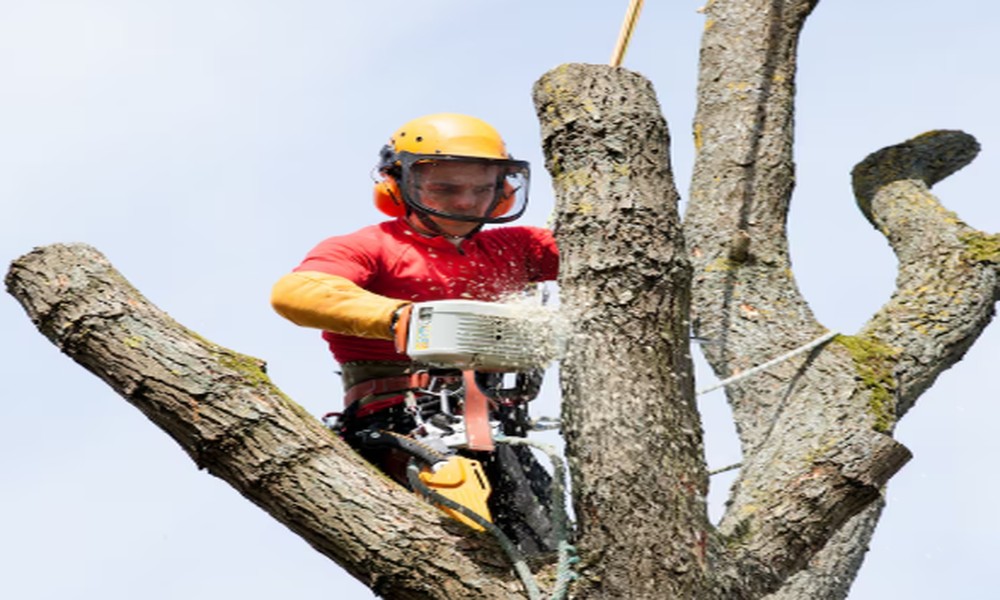
Trees are similar to old homes. Certain trees require careful maintenance. Some require removal and begin again. Deciding between tree restoration and replacing trees is not always easy and often feels like a simple technical decision. Safety is a factor. Also, budgets, timelines, and what you would like the area to be in 5 or 10 years down the road. Here’s an approach to think about it.
What Exactly Does “Restoration” Actually Mean?
Restoration focuses on preserving the tree that is already in existence. It could comprise:
- Structural pruning can reduce the weight of branches and repair weak unions
- Bracing or cabling to provide support in high-risk zones
- Soil care, such as aeration, compost, biochar, and aeration
- Watering deep into the root and specific fertilization
- Mulching to prevent moisture from escaping and decrease competition
- Control of disease and pests
When it is appropriate to restore
- The tree is strong in its overall structure, with a few fixable flaws.
- Roots are healthy, and there is no major decay of the trunk.
- The species is well-suited to the area and climate.
- You appreciate the shading, the history, or the habitat that the tree already gives you.
- Local laws encourage preservation.
Upsides
- It keeps shade and cooling precisely where it should be.
- Provides habitat to birds and pollinators.
- It is often cheaper than replanting and removal, particularly for trees with large branches.
- Beware of the “gap” seasons as the tree is growing.
Limits
- Restoration is not able to reverse the effects of severe decay or major root loss that is major.
- It is imperative to maintain it. It is not enough to “set the thing aside and let it go.”
- The risk of storms may be higher than for a tree that is young and well-built tree.
What Is “Replacement”? Will It Cover?
Removing the existing tree and replanting a new one. If done properly, it starts with the appropriate plant species and a strategy that will set the tree up for years of growth.
If replacement is logical, it makes sense.
- The tree is in advanced decay, with significant root damage or a broken tree trunk.
- The species is invasive and brittle. It also consistently does not thrive in your environment.
- Roots have raised sidewalks and could threaten utilities that aren’t safe for correction.
- You’d like to revamp the space to improve its canopy layout or size.
- The cost of restoration is higher than the expected gain.
Upsides
- Lower risk for long-term risks if you choose a suitable species and type.
- A chance to diversify. Monocultures do not work together. Multispecies can withstand the test of time.
- You can adjust space, volume of soil, and watering from the beginning.
Limits
- The loss of immediate shade, along with curb appeal.
- Young trees require regular irrigation for the first 2 to 3 years.
- Permits might be required. Removals can attract the attention of neighbors.
A Quick Decision Checklist
Answer these questions in order. If you don’t answer “no” at any time, then you can lean towards replacement.
- Does the tree have a solid foundation?
There are no open spaces within the root, no swelling soil, and no significant root cuts.
- Are the species a suitable choice for this area?
Take into consideration mature height, width of branches, branch habit, and drought tolerance.
- Do specific pruning and soil care help reduce the danger to acceptable levels?
Be upfront about wind exposure and other targets nearby, such as playgrounds and roofs.
- Does the expected return justify the need for ongoing maintenance?
Budget for regular pruning, mulching, and work on the soil.
If you answer “yes” all over the place, then restoration is typically the best option.
Time And Cost, In Simple Words
- Restoration: Often lower upfront cost, faster results. You maintain the shade and structure. You pay lower amounts as time passes to maintain the structure.
- Replacement: More expensive initial cost for removal and plant. Low maintenance in the future if the best tree is picked. The tree will take years to mature into shade.
If You Plant Well, Substitute
Give the tree you have been dreaming of an opportunity to shine:
- Select the species that best suits your climate and microsite. Sun, wind, salt, and soil all play a role.
- Make sure the hole is the right size, and then break the roots that are circling it.
- Plant at the correct depth, with the flare of the roots apparent.
- Mulch in a broad band, but not when it comes in contact with the tree.
- Drink more often and more deeply. Change your watering schedule according to the weather, not by the calendar.
- Make a small adjustment to the structure of your home in the initial three to five years.
The Most Important Thing Is The Bottom Line
If the tree is healthy and is well-placed, it can be restored to preserve the habitat, shade, and appearance of your backyard. In the event that the plant is dangerous and not a good match for the area, or long removed, replacement will protect homeowners, property, as well as the future canopy. Any of the options can be “better” in the context of the reality of the situation. Begin by focusing on safety, then make sure you are able to match your decisions with the terrain and think in years instead of months. Your landscape will be grateful in the future.
This post was written by a professional arborist at Tree Service Company Clearwater FL. Robert Miller is the owner of Arbor Wise Professional Tree Care, a locally owned and operated tree service company that offers superb lawn care by the most experienced Arborists. Arborwise Tree Services is a tree removal company that offers stump removal, tree pruning, stump grinding, fertilization, and tree restoration. We have an extraordinary lawn care industry notoriety covering the Pinellas county area.